The people of the Mölltal valley have always been a devout mountain people. Their piety is evidenced by the many wayside crosses in the valley, the crosses on the alpine pastures, and the chapels.
These signs were erected primarily in places where the fate of a valley dweller was particularly connected to them. Such a cross was popularly calleda "Marterle."
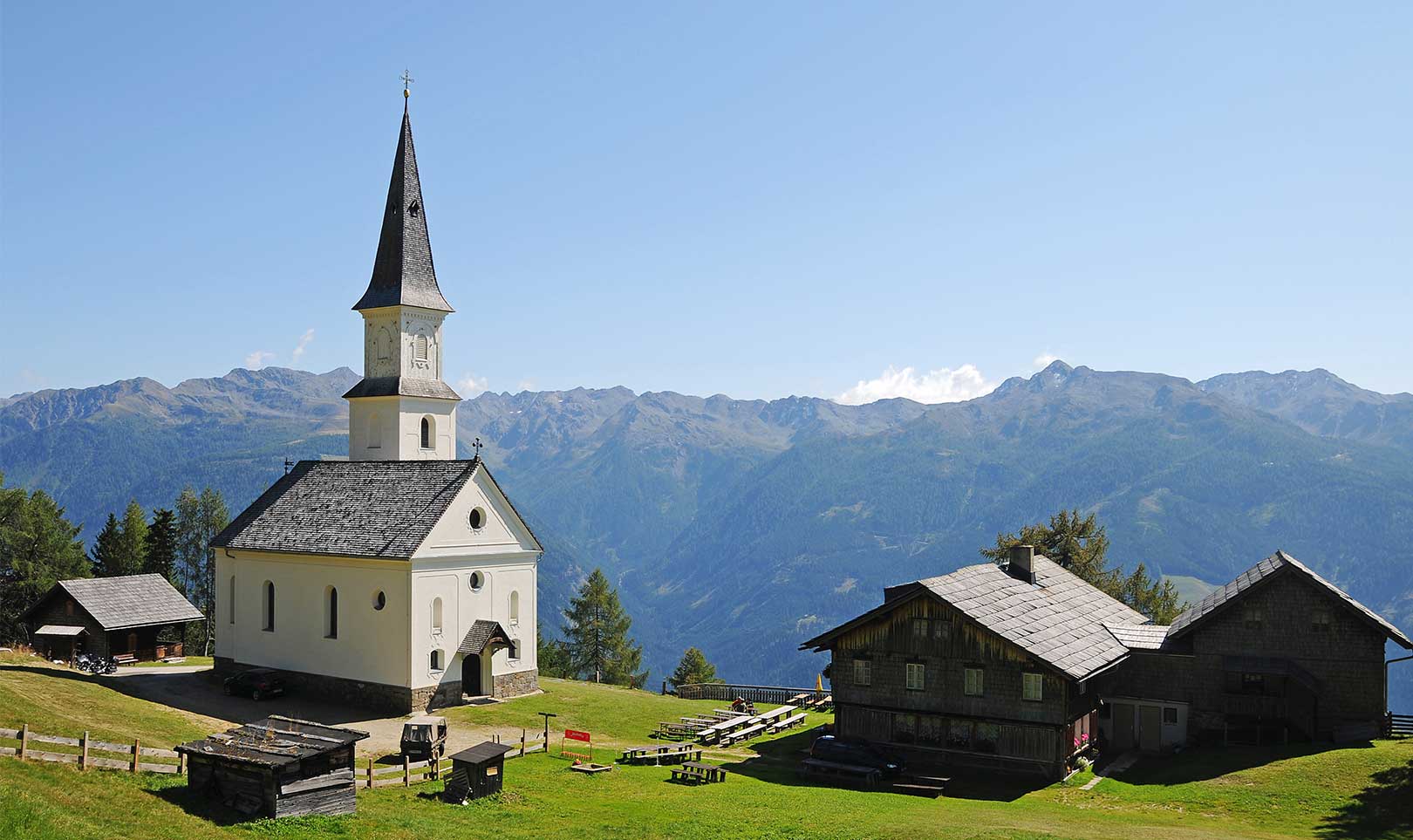
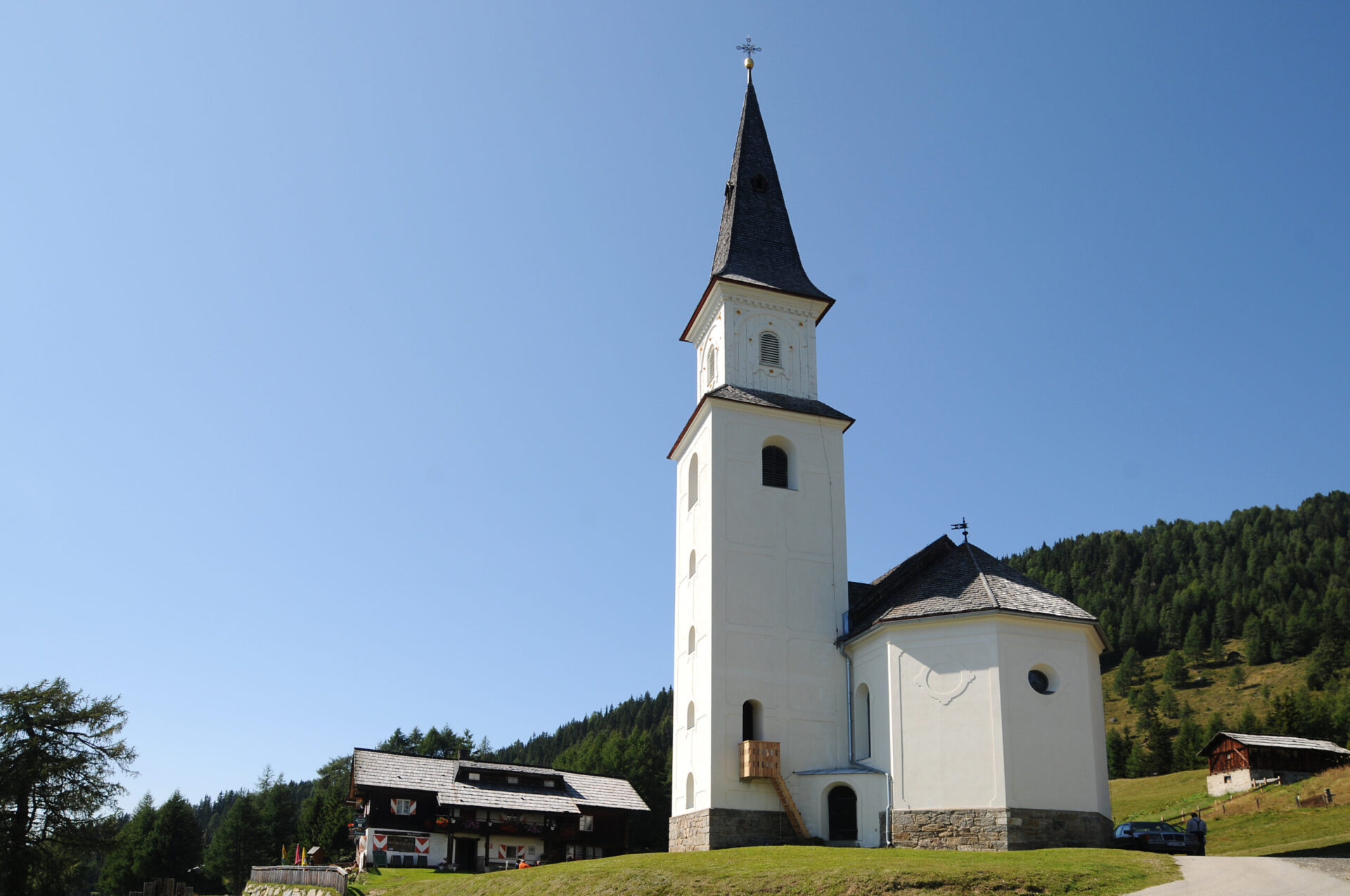
This is how the pilgrimage site "Marterle" came into being, located at an altitude of approx. 1,861 m on the southern slope of the Sadnig group. Since time immemorial, there had been a weather cross roughly carved from a tree trunk on the alpine meadow where the church stands today. A small niche had been hollowed out under the crossbeam, in which there was a statue. This wayside cross is said to have been erected by a rather elderly shepherd. This shepherd had been in mortal danger while searching for his sheep. He had lost his way on the very steep rock face of the Wenneberg Alps and, in his distress, had vowed to have a weather cross erected on the aforementioned alpine meadow. In 1854, the then farmer in Wenneberg had a wooden chapel built on the site of the weather cross in gratitude for his recovery from a serious illness.
Many people made pilgrimages to this chapel, so the Walker farmer decided to renovate it. The chapel was clad with masonry on the outside and inside. The Walker farmer provided the building site and an adjacent meadow, and the Rangersdorf parish office had to ensure the preservation of the Wenneberg pilgrimage. On September 9, 1860, the chapel was consecrated by the local priest of Rangersdorf. The number of processions grew steadily, and even from faraway places, numerous believers made pilgrimages to this place of grace and found comfort in many ways.
Like everything built by human hands, the Wenneberg Alpine Chapel was also crumbling under the ravages of time and in need of thorough repair. In view of the large number of pilgrims, the little church also needed to be enlarged. The newly appointed local priest, Reverend Josef Konas, recognized the need and was determined to build a church at the "Marterle." Reverend Josef Konas contacted Mayor Josef Fercher and the local council, and it was decided to submit the matter to the Reverend Prince-Bishop. A very favorable opportunity arose when His Excellency, the Reverend Prince-Bishop Dr. Josef Kahn, himself a native of the Mölltal valley, administered the holy sacrament of confirmation in Rangersdorf on June 12, 1899, and carried out the canonical visitation.
After the celebrations had ended, the mayor and the local council asked His Excellency to arrange for the construction of a church at the "Marterle." The prince-bishop promised to grant this request, and soon afterwards the local parish priest was commissioned to build the new pilgrimage church at the Marterle. Once the plans had been drawn up, approval was obtained from the diocese in 1900 and from the imperial district administration in November 1901. The construction was entrusted to master builders Chrysanth Ebner from Winklern and Josef Rothschopf from Rangersdorf as experts. The laying of the foundation stone by the local parish priest took place on May 31, 1902, with great festivity and the participation of about 2,000 pilgrims.
Construction began on July 14, 1902. On October 1, 1903, the tower cross was consecrated, and on September 7, 1904, the solemn benediction of the new pilgrimage church took place at the wayside shrine. The interior was furnished by cabinetmaker Johann Rothschopf from Rangersdorf, and the church paintings were done by Josef Buchauer from Sterzing/Tyrol.
The restaurant next to the church was opened. On June 22, 1906, His Excellency Prince-Bishop Dr. Josef Kahn consecrated the church at the "Marterle." The pilgrimage site "Marterle" has also been recognized by the Holy See, with Pope Pius X granting indulgences and privileges. The papal blessing may be given in this church on the following days: Saturday after Corpus Christi, July 25 (St. James' Day), Mary's Name Sunday, and September 29 (St. Michael's Day).